sábado, 9 de mayo de 2015

Other Explorers

Vasco Núñez de Balboa, in 1513, he led an expedition that crossed the isthmus of Panama. He was the first European to see the Pacific Ocean from its eastern coast and the first European city to establish a permanent American mainland.


The name America comes ferom Amerigo Vespucci, an Italian navigator who explored the coast of the New World after Columbus. He claimed to be the first person to set foot on the new continent.


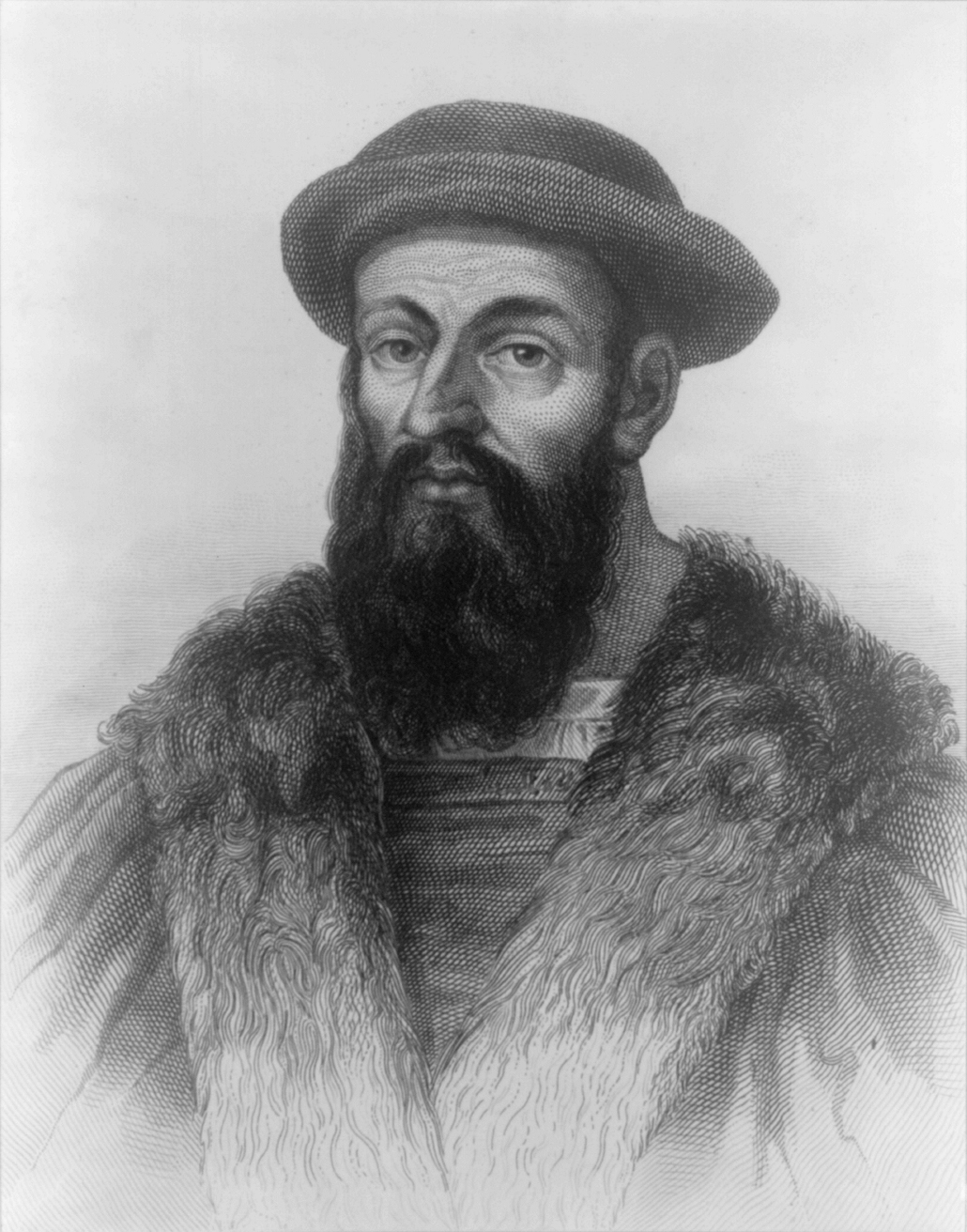
Ferdinand Magellan, in 1519, he led an expedition to find a sea route connecting the Atlantic and Pacific Oceans. The expedition departed from Sanlúcar de Barrameda (Seville) and continued along the coast of South America until reaching a strait that led to the Pacific Ocean.


Juan Sebastián Elcano, was the captain, he took the control of the expedition and led the return voyage.


domingo, 22 de marzo de 2015

The Printing Press

   This process continued until German Johannes Gutenberg invented the printing press.
 
   In his workshops, he made wooden moulds of every letter of the alphabet and filled them with iron, creating the first example of movable types.

   Using his new system, Gutenberg was able to produce many copies of the Bible in the same time it took the monks to make just one copy.

   The famous Gutenberg Bible was printed in 1455 in the city of Mainz.


The First Printing


Current Print


lunes, 16 de febrero de 2015

Medieval institutions

   The political structure of the kingdoms was based on three institutions: the monarchy , the Cortes and the municipal council.

   The Cortes were created when the monarchs allowed municipal representatives into the extraordinary Curia, an assembly of nobles and clergy. The Cortes advised the king and sometimes approved laws, but it could not legislate.

   The first Cortes on the Peninsula were created in the Kingdom of Leon in 1188.

   In the 13th century, the Kingdom of Castile and the territories of the Crown of Aragon and tge Kingdom of Navarre also established Cortes.


domingo, 18 de enero de 2015

The Hundred Years War

The Hundred Years War (French: Guerre de Cent Ans; English: Hundred Years' War) was an armed conflict that lasted 116 years (January 1, 1337 - October 17 de 1453) between the kingdoms of France and England. This war was feudal roots, since its purpose was simply to resolve who would control the vast possessions of the English monarchs in French territories since 1154, due to the accession of Henry II Plantagenet, Count of Anjou, to the English throne. Had international implications and finally, after many vicissitudes, ended with the British withdrawal from French soil.


 These are some photos:


domingo, 30 de noviembre de 2014

Noble warriors. (Nobles guerreros)

The noble warriors is a privileged group in society of feudalism.

In feudal society, the main function of the nobility, and the king himself, was to be warriors. Are the knights who were engaged in trade of arms. Have the equipment, horses and weapons was very expensive and only the feudal lords could perform that office.

The nobles made war to defend their territory or assisting the monarch or other gentleman who owed allegiance. The war provided, if won, land and wealth which enhanced the power of the nobility
Their social function allowed the nobility live with privileges. They had to work, did not pay taxes and were the only ones who could give them weapons and exercise control over the rest of the population.


jueves, 30 de octubre de 2014

Reino de Granada. (Kingdom of Granada)

El Reino de Granada fue el último estado islámico de la Península Ibérica.

El reino de Granada es fundado por Muhammad.  El Rojo (1232-1273) tras un conflicto con (after a conflict with) Murcia, logrando constituir un señorío en (Guadix -Baza) Jaén desde donde, en poco tiempo, planea ocupar (plans to occupy)  Granada. Así ocurre en año 1237 cuando entra y toma la ciudad sin demasiada oposición fundando allí un nuevo reino (founding a new kingdom) dirigido por la omeya Nazarí, conocida, entre otras muchas cosas, por ser artífice de la magnífica obra de la Alhambra de Granada.


Además de iniciar la construcción de esta maravilla arquitectónica Muhammad I ampliará las fronteras (the frontiers) del reino hasta Málaga y Almería, territorio que se mantendría, con poca diferencia, hasta el final del emirato acaecido en 1492 a manos de los Reyes Católicos. (the Catholic Monarchs) Respecto a la relación con otros reinos peninsulares, en los primeros años de existencia de Granada se confirma la sumisión a Fernando III, rey de Castilla, a través del pacto de Jaén donde el musulmán le prestaba vasallaje al castellano a cambio de poder conservar el pequeño reino. De carácter positivo fueron, al contrario que las anteriores, las establecidas con el norte de África como por ejemplo aquellas que permitían el comercio de oro con Sudán, siendo Granada el principal proveedor, hasta la llegada de los portugueses, de ese metal en Europa. (Europe)


Territorio conquistado. 


Guerra de musulmanes y cristianos.


domingo, 19 de octubre de 2014

The main ideas of Islam.

The profession of faith. It is the brief to become Muslim recognizing Allah and Mohammed is his prophet formula. In Islam it is often repeated.

Prayer, Friday-or individual-the public five times a day. It is a formal ritual that lasts 5 to 10 minutes and is preceded by toilets or ablutions.


The obligatory alms or charity.


The annual fast of the month of Ramadan, where all food, drink and sex are forbidden from dawn to dusk. It has great social significance for all strive for the same.


The pilgrimage to Mecca at least once in their life if possible.