sábado, 9 de mayo de 2015

Other Explorers

Vasco Núñez de Balboa, in 1513, he led an expedition that crossed the isthmus of Panama. He was the first European to see the Pacific Ocean from its eastern coast and the first European city to establish a permanent American mainland.


The name America comes ferom Amerigo Vespucci, an Italian navigator who explored the coast of the New World after Columbus. He claimed to be the first person to set foot on the new continent.


Ferdinand Magellan, in 1519, he led an expedition to find a sea route connecting the Atlantic and Pacific Oceans. The expedition departed from Sanlúcar de Barrameda (Seville) and continued along the coast of South America until reaching a strait that led to the Pacific Ocean.
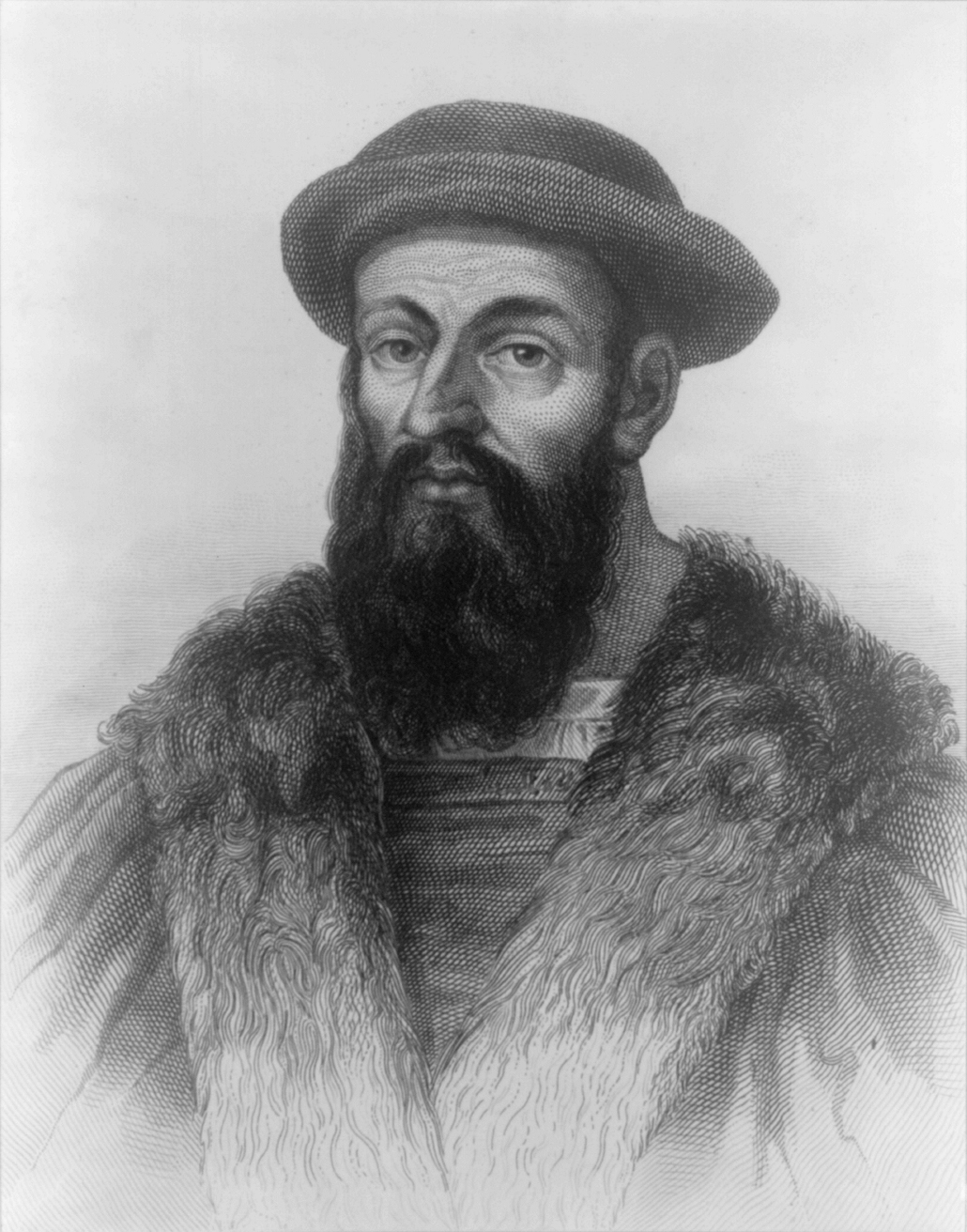


Juan Sebastián Elcano, was the captain, he took the control of the expedition and led the return voyage.


domingo, 22 de marzo de 2015

The Printing Press

   This process continued until German Johannes Gutenberg invented the printing press.
 
   In his workshops, he made wooden moulds of every letter of the alphabet and filled them with iron, creating the first example of movable types.

   Using his new system, Gutenberg was able to produce many copies of the Bible in the same time it took the monks to make just one copy.

   The famous Gutenberg Bible was printed in 1455 in the city of Mainz.


The First Printing


Current Print


lunes, 16 de febrero de 2015

Medieval institutions

   The political structure of the kingdoms was based on three institutions: the monarchy , the Cortes and the municipal council.

   The Cortes were created when the monarchs allowed municipal representatives into the extraordinary Curia, an assembly of nobles and clergy. The Cortes advised the king and sometimes approved laws, but it could not legislate.

   The first Cortes on the Peninsula were created in the Kingdom of Leon in 1188.

   In the 13th century, the Kingdom of Castile and the territories of the Crown of Aragon and tge Kingdom of Navarre also established Cortes.


domingo, 18 de enero de 2015

The Hundred Years War

The Hundred Years War (French: Guerre de Cent Ans; English: Hundred Years' War) was an armed conflict that lasted 116 years (January 1, 1337 - October 17 de 1453) between the kingdoms of France and England. This war was feudal roots, since its purpose was simply to resolve who would control the vast possessions of the English monarchs in French territories since 1154, due to the accession of Henry II Plantagenet, Count of Anjou, to the English throne. Had international implications and finally, after many vicissitudes, ended with the British withdrawal from French soil.


 These are some photos: